Structural Drying in Garden Grove, CA
Surface drying makes a room look dry. Structural drying makes the framing, slab and wall cavities read dry. The drying team runs equipment until the readings say so.
(888) 563-9619Call about structural drying in Garden Grove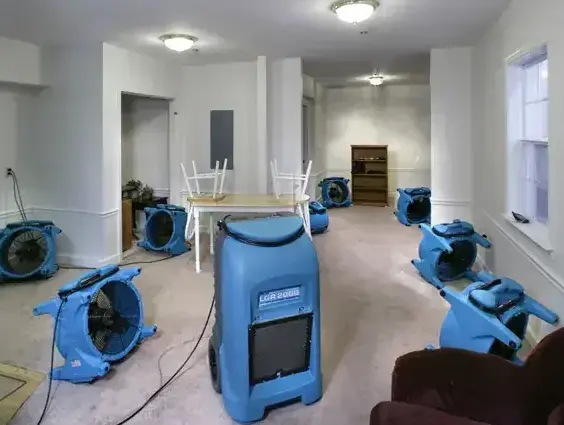
What to do the moment you find structural drying
- Keep the house closed and cool. Close windows so humid outside air does not slow the drying.
- Leave the equipment running. Do not switch off air movers or dehumidifiers, even at night.
- Keep doors to the drying area shut. Contained rooms dry faster and more evenly.
- Empty nothing you are unsure of. Ask before moving equipment or removing wet materials.
How structural drying work is held to the S500 standard
Rapid local response
The response team answers day or night and sends a crew across Garden Grove and the nearby Orange County cities, weekends included.
IICRC S500 drying standard
IICRC S500 is the industry drying standard. The drying team maps moisture first and pulls equipment only when readings say dry.
Claim-ready documentation
Most crews log daily moisture readings and take timestamped photos before any demolition, which is what an adjuster reads.
Orange County water experts
Slab leaks, copper pinholes, hard-water heater failures and winter storm runoff are the losses Garden Grove homes actually have.
What does structural drying and dehumidification cost in Garden Grove, CA?
In Garden Grove, CA, structural drying typically runs $800 to $6,000 or more, depending on the class of the loss, how many rooms are drying, the equipment count, and how many days it takes to reach the drying goal.
- Air movers and one LGR
- Daily readings
- Three days typical
- Multiple dehumidifiers
- Cavity and cabinet drying
- Drying log for the claim
- Hardwood or slab drying
- Desiccants or mats
- Extended monitoring
What moves the number: the class of the loss, the number of rooms and air movers, the materials being dried, and how many days it takes to reach the goal.
For a closer planning range, try the water damage cost calculator. Every range here is typical, not a quote.
How structural drying is handled in Garden Grove
- 1
Walkthrough and moisture map
The tech who does the walkthrough finds the source and maps how far the water traveled, with thermal imaging and pinless meters.
- 2
Extraction
The extraction crew pulls standing water with truck-mounted extraction so it leaves the building instead of spreading to the next room.
- 3
Drying set to the room
The drying team sets air movers to each room's evaporation load and runs LGR dehumidifiers, with desiccants for Class 4 materials.
- 4
Daily readings to dry
Most crews record readings daily and pull equipment once wet materials sit within 2 to 4 points of a dry reference.
Structural drying is the part of a water loss most people never see. After the water is extracted, the framing, the back side of the drywall, the slab and the cabinet voids still hold moisture. IICRC S500 is the industry drying standard, and it sets the goal: wet materials are dry when they read within 2 to 4 points of a dry reference material in an unaffected part of the same building.
How the drying plan is set
- Moisture mapping before any equipment goes down, with pinless meters and thermal imaging
- The class of the loss, Class 1 through 4, which sets how much equipment a room needs
- Air movers placed to the evaporation load of each room
- LGR dehumidifiers to pull that moisture out of the air
- Desiccant dehumidifiers for dense Class 4 materials such as hardwood and concrete
The EPA mold cleanup guidance explains why drying wet materials quickly is the best way to prevent mold.
Floors or walls still damp days after a leak? Get the drying started today with real readings.
Call about Garden Grove dryingWhat the drying team checks every day
Most crews record readings daily: moisture content in the drywall, framing and flooring, plus temperature and humidity inside and outside the drying area. Those psychrometric readings show whether the equipment is pulling water out fast enough. Air movers get repositioned as areas dry, and equipment is removed only when the readings meet the goal, not on a set schedule.
Stucco and slab slow things down
Garden Grove homes are built with stucco walls on concrete slabs, which hold moisture and release it slowly. Walls and floors near the slab edge often need the longest drying.
Drying versus tearing out
Drying in place saves drywall, cabinets and flooring when the water was clean and the loss was caught early. Materials touched by Category 3 water, or that have swollen, crumbled or started to grow mold, come out. For water that came in under a floor, see slab leak water damage, and for the first step on any loss, see water extraction. Quick drying also matters for the insurance claim, since the drying log is part of the file.
Structural Drying and Dehumidification across Garden Grove
The Garden Grove restoration crew handles structural drying in every Garden Grove ZIP and the neighboring Orange County cities.
The restoration team handles structural drying across Historic Main Street, West Garden Grove, Little Saigon, Koreatown and the Grove District, plus Westminster, Stanton, Anaheim and Santa Ana.
ZIP codes 92840, 92841, 92842, 92843, 92844, 92845 and 92846 are all covered.
See every neighborhood and ZIP coveredStructural Drying and Dehumidification questions in Garden Grove, CA
What is the difference between surface drying and structural drying?
Surface drying makes floors and walls feel dry. Structural drying dries the framing, cavities, slab and back of the drywall until readings match a dry reference.
How is the drying goal measured?
Crews compare moisture readings in wet materials to a dry reference material in an unaffected part of the same building. The goal is usually within 2 to 4 points.
Why is the equipment so loud and running all the time?
Air movers and dehumidifiers work continuously to move evaporated water out of the building. Turning them off slows drying and can extend the job.
How long does structural drying take?
A contained Class 1 or 2 loss usually dries in three to five days. Hardwood, plaster and slab under flooring take longer.
What are Class 1 through 4 losses?
They describe how much water and how much porous material is involved, from a small area with little absorption to dense materials like hardwood and concrete.
Does drying prevent mold?
Drying quickly within the 24 to 48 hour window is the most effective way to limit mold growth on wet materials.
Structural Drying and Dehumidification in Garden Grove? Call now.
The longer the water sits, the further it wicks into slab, drywall and framing. The restoration team answers day or night.