Apartment and Condo Water Damage in Garden Grove, CA
In a condo or apartment, one leak rarely stays in one unit. The restoration team maps every unit the water reached and dries shared walls, ceilings and floors in order.
(888) 563-9619Call about apartment and condo water damage in Garden Grove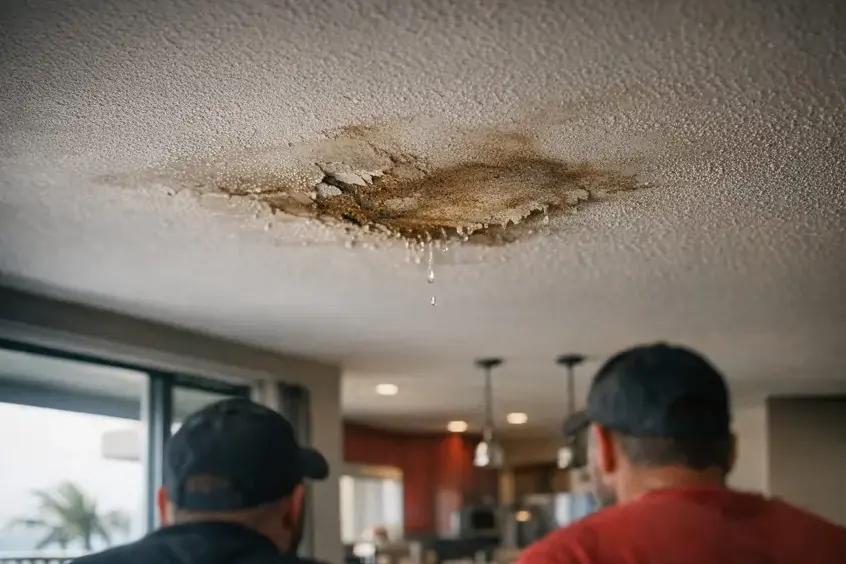
What to do the moment you find apartment and condo water damage
- Find and stop the source. Ask the upstairs neighbor or manager to shut the water to the leaking fixture.
- Tell the manager or HOA. Report the leak right away so every affected unit can be checked.
- Protect your belongings. Move electronics and furniture away from drips and wet walls.
- Photograph both units. Take photos in your unit and, if possible, where the leak started.
How apartment and condo water damage work is held to the S500 standard
Rapid local response
The response team answers day or night and sends a crew across Garden Grove and the nearby Orange County cities, weekends included.
IICRC S500 drying standard
IICRC S500 is the industry drying standard. The drying team maps moisture first and pulls equipment only when readings say dry.
Claim-ready documentation
Most crews log daily moisture readings and take timestamped photos before any demolition, which is what an adjuster reads.
Orange County water experts
Slab leaks, copper pinholes, hard-water heater failures and winter storm runoff are the losses Garden Grove homes actually have.
What does apartment and condo water damage cost in Garden Grove, CA?
In Garden Grove, CA, apartment and condo water damage restoration typically runs $1,000 to $12,000 or more for the building, depending on how many units are affected, which walls and ceilings are wet, and the water category.
- Ceiling or wall drying
- Moisture mapping
- Documentation
- Source unit and unit below
- Shared wall drying
- Daily logs per unit
- Stacked or neighboring units
- Material removal
- Coordinated drying
What moves the number: the number of units affected, the water category, which walls, ceilings and floors are wet, and how quickly every unit was checked.
For a closer planning range, try the water damage cost calculator. Every range here is typical, not a quote.
How apartment and condo water damage is handled in Garden Grove
- 1
Walkthrough and moisture map
The tech who does the walkthrough finds the source and maps how far the water traveled, with thermal imaging and pinless meters.
- 2
Extraction
The extraction crew pulls standing water with truck-mounted extraction so it leaves the building instead of spreading to the next room.
- 3
Drying set to the room
The drying team sets air movers to each room's evaporation load and runs LGR dehumidifiers, with desiccants for Class 4 materials.
- 4
Daily readings to dry
Most crews record readings daily and pull equipment once wet materials sit within 2 to 4 points of a dry reference.
Garden Grove has thousands of apartments, condos and townhomes, from garden-style complexes off Chapman Avenue to newer mixed-use buildings in the Brookhurst Triangle. Stacked units share plumbing walls, drain stacks and ceilings, so a failed washer hose or toilet line upstairs can wet two or three units before anyone notices.
Common multi-unit water losses
- Supply line or toilet leaks from the unit above coming through the ceiling
- Shared drain stack backups showing up in the lowest unit
- Water heater or washer failures in stacked laundry closets
- Leaks through a shared party wall into the neighbor's kitchen or closet
- Balcony and deck drainage failures during winter storms
Responsibility often depends on where the leak started and on the building's governing documents. The California Department of Insurance explains how condo owner, landlord and renter policies differ.
Water coming through from the unit above? Tell the neighbor or manager, then call.
Call about a Garden Grove unit leakHow a multi-unit loss is dried
The tech who does the walkthrough maps every affected unit, starting where the water entered and following it down and sideways with thermal imaging and meters. The extraction crew removes standing water in each unit, and the drying team sets equipment so each space dries without blowing moist air into the next one. Shared walls are checked from both sides, and ceilings under the source unit get the same careful release and drying as any ceiling leak.
One loss, several claim files
Owners, tenants and the HOA or property manager may each need records. Moisture maps, daily readings and photos taken before any demolition are organized by unit so each party has what they need.
Working with owners, tenants and HOAs
Access matters in a building. The restoration team coordinates entry to each unit and keeps equipment noise and power use within reason for neighbors. For leaks that start in a ceiling, see ceiling leak water damage. For drain stack backups, see sewage backup cleanup. The EPA moisture guide covers why shared walls need fast drying.
Apartment and Condo Water Damage across Garden Grove
The Garden Grove restoration crew handles apartment and condo water damage in every Garden Grove ZIP and the neighboring Orange County cities.
The restoration team handles apartment and condo water damage across Historic Main Street, West Garden Grove, Little Saigon, Koreatown and the Grove District, plus Westminster, Stanton, Anaheim and Santa Ana.
ZIP codes 92840, 92841, 92842, 92843, 92844, 92845 and 92846 are all covered.
See every neighborhood and ZIP coveredApartment and Condo Water Damage questions in Garden Grove, CA
Who pays for water damage from the unit above?
It depends on where the leak started, the building's governing documents and each party's policy. Coverage depends on your policy, so it is worth checking with your own insurer.
Should the unit below be checked even if it looks fine?
Yes. Water moves through ceilings and shared walls before it shows. A moisture check of neighboring units prevents hidden damage.
Can drying equipment run in an occupied unit?
Often, yes. Equipment is placed to limit disruption, though noise and warmth are part of drying.
How long does a multi-unit loss take to dry?
Three to six days is common. Units further from the source may dry sooner than the unit where the leak began.
Does the HOA or the owner hire the restoration company?
It varies by building and by where the damage is. Many HOAs handle common areas while owners handle their unit interiors.
What records should tenants keep?
Photos of damaged belongings and the leak, dates, and any communication with the landlord or manager help a renters claim.
Apartment and Condo Water Damage in Garden Grove? Call now.
The longer the water sits, the further it wicks into slab, drywall and framing. The restoration team answers day or night.